Best Italian Herbs and Cheese Sourdough Bread Recipe
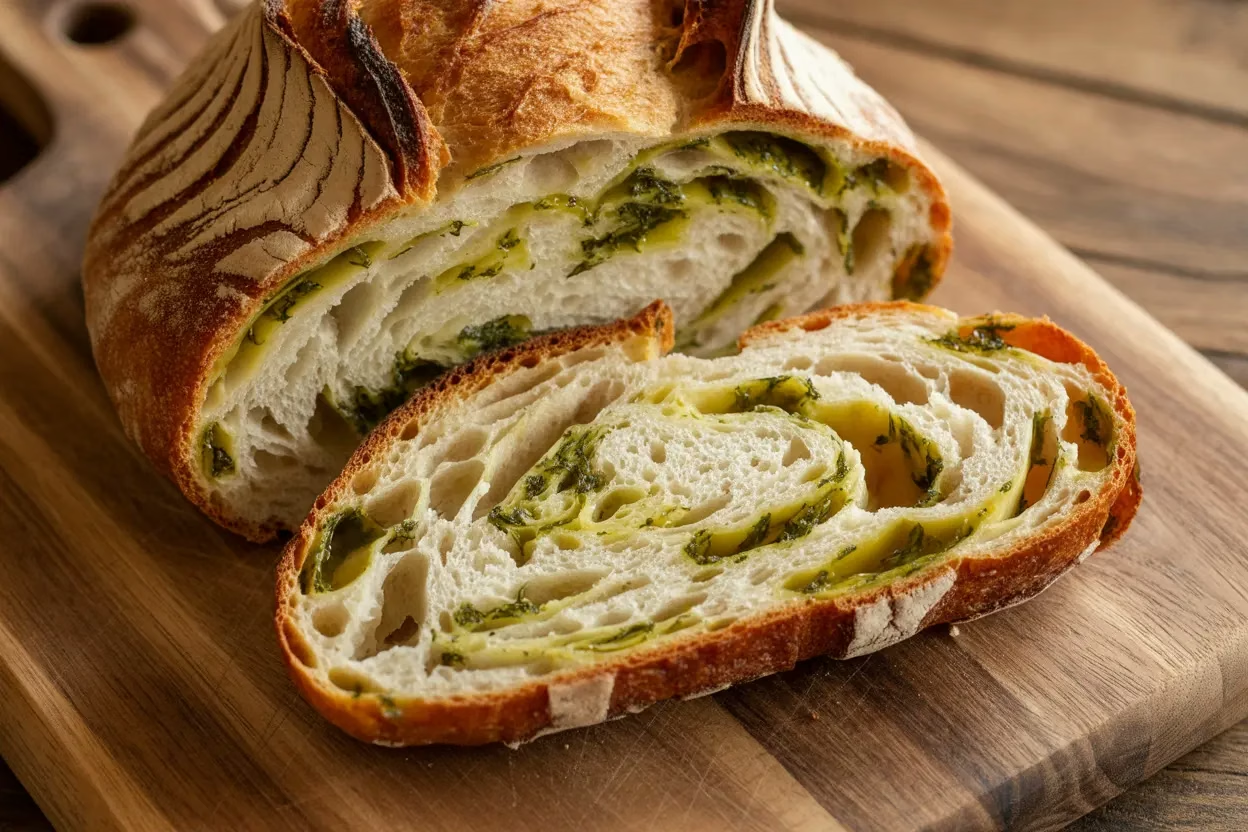
There is something almost magical about pulling a golden, herb-flecked loaf from the oven and watching steam curl up from the crackling crust. This Italian Herbs and Cheese Sourdough Bread is the kind of recipe that fills your kitchen with an aroma so good your neighbors might start knocking. The tangy depth of a well-fermented sourdough, layered with fragrant rosemary, oregano, basil, and a generous blanket of melted cheese, makes every single slice feel like a small celebration.
Whether you are new to sourdough baking or you have been nurturing your starter for years, this Herb and Cheese Sourdough Bread hits the sweet spot between approachable and impressive. It works beautifully as a breakfast centerpiece, a companion to a big bowl of soup, or honestly, just torn apart warm from the pan with a little butter. Once you try it, you will find yourself making it on repeat.
What Makes This Recipe Special
- Bold Italian flavor: A curated blend of dried Italian herbs gives every bite that unmistakable pizzeria-style fragrance that feels both comforting and elegant.
- Two-cheese richness: Combining sharp Parmesan and shredded mozzarella creates a crust that is crispy, golden, and gloriously stretchy at the same time.
- Natural fermentation depth: The long cold ferment in this Italian Herb And Cheese Sourdough Bread develops a nuanced tang that store-bought bread simply cannot replicate.
- Stunning enough to gift: The scored surface dotted with herbs and bubbling cheese looks artisan bakery-worthy with very little effort.
Key Ingredients
- Active sourdough starter: Fed and bubbly, at peak activity for the best rise and flavor in your Herb Sourdough Bread Recipe.
- Bread flour: Higher protein content builds strong gluten structure, giving you that open, chewy crumb.
- Warm water: Around 80 to 85 degrees Fahrenheit encourages fermentation without overheating the dough.
- Fine sea salt: Enhances flavor and regulates yeast activity throughout the ferment.
- Dried oregano: Earthy and bold, it anchors the Italian herb profile.
- Dried rosemary: Adds a slightly piney, aromatic note that perfumes the whole loaf.
- Dried basil: Brings a gentle sweetness that balances the sharper herbs.
- Garlic powder: A subtle savory backbone that ties every element together.
- Shredded mozzarella: Melts into pockets throughout the dough and creates a spectacular cheesy crust.
- Finely grated Parmesan: Adds a salty, nutty bite and helps the crust crisp up beautifully.
- Olive oil: A light drizzle before baking deepens the golden color and adds richness.
Using quality tools and fresh, well-sourced ingredients can genuinely transform your results when baking Italian Herb And Cheese Artisan Bread. A reliable Dutch oven is especially important for trapping steam and achieving that bakery-quality crust.
Here is the complete recipe:

Italian Herbs and Cheese Sourdough Bread
Equipment
- Large mixing bowl
- Dutch oven (5 to 7 quart)
- Banneton proofing basket or bowl with towel
- Bench scraper
- Lame or sharp knife for scoring
- Parchment paper
- Wire cooling rack
- Kitchen scale
Ingredients
- 100 g active sourdough starter fed and bubbly, at peak activity
- 375 g warm water 80 to 85 degrees Fahrenheit
- 500 g bread flour plus extra for dusting
- 10 g fine sea salt
- 1 tsp dried oregano
- 1 tsp dried rosemary lightly crushed
- 1 tsp dried basil
- 1/2 tsp garlic powder
- 1 cup shredded mozzarella divided, low-moisture whole milk preferred
- 1/2 cup finely grated Parmesan for topping
- 1 tbsp olive oil for drizzling before baking
Instructions
- In a large bowl, combine 100 g of active sourdough starter with 375 g of warm water. Stir until the mixture looks milky and the starter is dissolved. Add 500 g of bread flour and mix with your hands or a dough spatula until no dry flour remains. Cover and rest for 30 minutes (autolyse).
- Sprinkle 10 g of fine sea salt over the rested dough along with the dried oregano, rosemary, basil, and garlic powder. Using wet hands, squeeze and fold the dough repeatedly for 2 to 3 minutes until the salt and herbs are fully incorporated and the dough feels cohesive.
- Perform 4 sets of stretch and folds over the first 2 hours, spacing each set 30 minutes apart. To stretch and fold, grab one side of the dough, stretch it upward, then fold it over to the opposite side. Rotate the bowl 90 degrees and repeat until you complete a full rotation. During the third set, scatter half of the shredded mozzarella over the dough and fold it in to distribute the cheese evenly through the dough.
- Cover the bowl with a damp towel or plastic wrap and allow the dough to bulk ferment at room temperature (around 75 degrees Fahrenheit) for a total of 4 to 5 hours from when you first mixed the dough. The dough is ready when it has grown by 50 to 75 percent, looks airy with visible bubbles on the surface and sides, and has a domed top.
- Gently turn the dough onto a lightly floured surface. Using a bench scraper and your hands, shape it into a tight round (boule) or oval (batard) by folding the edges inward and building surface tension. Place the shaped loaf seam-side up into a well-floured banneton basket or a bowl lined with a floured linen towel.
- Cover the banneton with plastic wrap or a shower cap and refrigerate for 10 to 16 hours. This cold proof slows fermentation and develops the complex sour flavor that makes this Italian herb and cheese sourdough bread so distinctive. Do not skip this step.
- When you are ready to bake, place your Dutch oven (with its lid) inside the oven and preheat to 500 degrees Fahrenheit (260 degrees Celsius). Allow the Dutch oven to preheat for a full 45 to 60 minutes. Do not rush this step, as a fully preheated vessel is essential for oven spring and crust development.
- Remove the dough from the refrigerator. Cut a piece of parchment paper to fit your Dutch oven and place it on your work surface. Flip the cold dough directly onto the parchment so the smooth side faces up. Using a sharp lame or serrated knife, score the top of the loaf with one deep slash or a decorative pattern. Scatter the remaining mozzarella and all of the Parmesan evenly over the surface, then drizzle lightly with olive oil.
- Carefully remove the hot Dutch oven from the oven. Using the parchment paper as a sling, lower the dough into the Dutch oven. Place the lid on and bake at 500 degrees Fahrenheit for 20 minutes. The trapped steam during this phase creates the crackling, blistered crust.
- After 20 minutes, carefully remove the lid. Reduce the oven temperature to 450 degrees Fahrenheit (230 degrees Celsius) and continue baking uncovered for 20 to 25 minutes, until the crust is a deep golden brown and the cheese is caramelized and spotty. The internal temperature of the loaf should read 205 to 210 degrees Fahrenheit on an instant-read thermometer.
- Use oven mitts to carefully lift the bread out of the Dutch oven using the parchment sling and transfer it to a wire cooling rack. Allow the loaf to cool for at least 1 hour before slicing. Cutting too early causes the interior crumb to become gummy as the starches inside are still setting. Patience here is rewarded with a perfect, open crumb.
Notes
Make It Your Own
- Sun-dried tomato twist: Fold in a handful of chopped sun-dried tomatoes with the cheese for a richer, slightly sweet variation on this Sourdough Italian Herb And Cheese Bread.
- Spicy kick: Add half a teaspoon of crushed red pepper flakes to the dough for a gently spiced loaf that pairs beautifully with creamy soups.
- Different cheese combinations: Swap mozzarella for provolone or fontina, or try a sharp aged cheddar for a completely different but equally delicious profile.
- Fresh herb version: Replace dried herbs with double the amount of finely chopped fresh rosemary and thyme for a more vibrant, grassy flavor.
How to Make Italian Herbs and Cheese Sourdough Bread
- Mix the dough: In a large bowl, combine 100 grams of active starter with 375 grams of warm water and stir until milky. Add 500 grams of bread flour and mix until no dry flour remains. Rest for 30 minutes (autolyse).
- Add salt and herbs: Sprinkle in 10 grams of fine sea salt along with oregano, rosemary, basil, and garlic powder. Squeeze and fold until fully incorporated.
- Stretch and fold: Perform 4 sets of stretch and folds over the first 2 hours, spacing them 30 minutes apart. During the third set, gently fold in half of the mozzarella to distribute it evenly through the dough.
- Bulk ferment: Cover the bowl and allow the dough to bulk ferment at room temperature (around 75 degrees Fahrenheit) for a total of 4 to 5 hours, until it has grown by 50 to 75 percent and looks airy and domed.
- Shape the loaf: Turn the dough onto a lightly floured surface. Shape it gently into a tight round (boule) or oval (batard), then place it seam-side up into a well-floured banneton or a bowl lined with a floured towel.
- Cold proof: Cover with plastic wrap and refrigerate for 10 to 16 hours. This slow cold proof is what builds the complex tang that defines a great Italian Herb And Cheese Sourdough Bread Recipe.
- Preheat aggressively: Place your Dutch oven inside the oven and preheat to 500 degrees Fahrenheit (260 degrees Celsius) for at least 45 to 60 minutes before baking.
- Score and top: Remove the dough from the fridge, flip it onto parchment paper, and score the top with a lame or sharp knife. Scatter the remaining mozzarella and all of the Parmesan over the surface, then drizzle lightly with olive oil.
- Bake covered: Carefully lower the dough (using the parchment as a sling) into the hot Dutch oven. Bake covered at 500 degrees for 20 minutes to generate steam and build the crust.
- Bake uncovered: Remove the lid, reduce heat to 450 degrees Fahrenheit, and bake for another 20 to 25 minutes until the crust is deep golden and the cheese is caramelized. Internal temperature should reach 205 to 210 degrees Fahrenheit.
- Cool completely: Transfer the loaf to a wire rack and resist cutting for at least 1 hour. Cutting too early releases steam and gums up the crumb.
Tips for Best Results
- Use a ripe, active starter: Your starter should be bubbly, doubled in size, and pass the float test before you begin. An underactive starter will result in a dense Cheese And Herb Sourdough Bread with poor oven spring.
- Do not skip the preheat: A scorching hot Dutch oven is non-negotiable. It creates the burst of steam that produces an open crumb and a crackling crust.
- Watch the cheese closely: Because cheese can burn faster than bread browns, keep an eye on the uncovered bake. If the cheese darkens too quickly, tent loosely with foil for the last 10 minutes.
- Cold ferment for flavor: The overnight refrigerator proof is where the real magic happens for depth of flavor in your Italian Herbs And Cheese Sourdough. Do not rush this step.
Serving Ideas
- Slice thick and serve warm alongside a bowl of ribollita, minestrone, or creamy tomato bisque.
- Toast slices and top with ricotta, a drizzle of honey, and fresh thyme for an elevated breakfast.
- Use as the base for an open-faced bruschetta with roasted cherry tomatoes and fresh basil.
- Pair with a charcuterie board featuring cured meats, olives, and fig jam for an effortless appetizer spread.
- Serve alongside pasta dishes like cacio e pepe or a hearty Bolognese for a cohesive Italian dinner.
Make Ahead and Storage
- Room temperature: Wrap the cooled loaf in a clean linen cloth or beeswax wrap and store at room temperature for up to 2 days. Avoid plastic bags, which soften the crust.
- Refrigerator: For longer freshness, store sliced bread in an airtight container in the fridge for up to 5 days. A quick toast revives it beautifully.
- Freezing: Slice the cooled loaf, layer parchment between slices, and freeze in a zip-lock bag for up to 3 months. Pull individual slices straight from frozen and toast directly.
- Reheating a whole loaf: To refresh a day-old loaf, spritz lightly with water and warm in a 375 degree Fahrenheit oven for 8 to 10 minutes until the crust crisps back up.
Frequently Asked Questions
Can I use all-purpose flour instead of bread flour?
Yes, all-purpose flour will work, but the crumb will be slightly less chewy and the structure a little softer. If using all-purpose, reduce the water by about 20 grams to account for the lower protein absorption.
My dough seems very sticky. Is that normal?
Absolutely. High-hydration sourdough dough is naturally tacky, especially before the stretch and fold sets develop the gluten. Resist the urge to add extra flour. Wet hands are your best tool when handling sticky dough.
Can I make this without a Dutch oven?
You can. Place the loaf on a preheated baking stone or heavy sheet pan. Put an oven-safe pan of boiling water on the rack below to simulate steam during the first 20 minutes, then remove it for the uncovered portion.
How do I know when my sourdough starter is ready to use?
A ready starter will have doubled or tripled in volume within 4 to 8 hours of feeding, have a domed or slightly fallen top, smell pleasantly tangy and yeasty, and a small spoonful dropped into water will float.
Final Thoughts
This Italian Herb And Cheese Sourdough Bread is more than a recipe. It is a weekend ritual, a gift you can bake for someone you love, and proof that patience and simple ingredients can produce something truly extraordinary. Once you pull that first crackling, cheese-crowned loaf from the oven and hear it sing as it cools on the rack, you will understand exactly why sourdough bakers become so devoted to their craft. Give it a try, trust the process, and enjoy every single slice.


